


GST Revamp: 12% & 28% Slabs to End, Higher 40% Levy on Sin Goods
- cagoyalayush
- Aug 16, 2025
- 2 min read
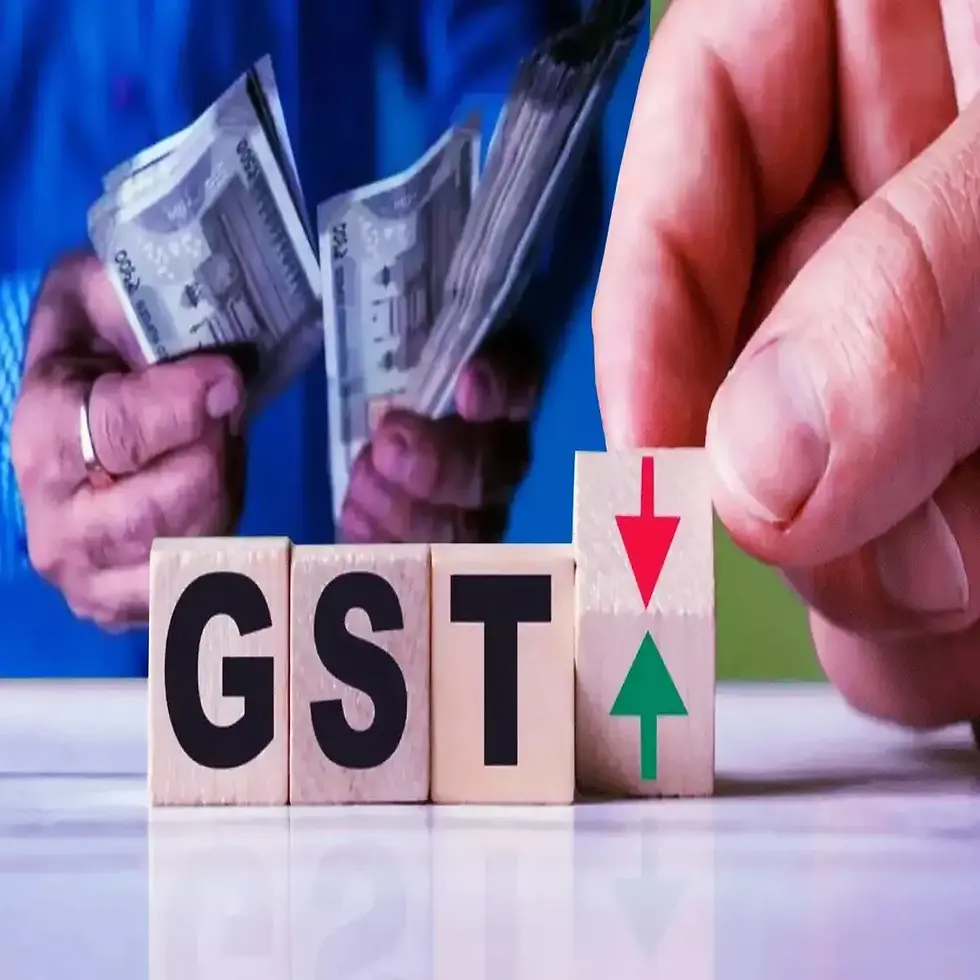
The Government of India has circulated a blueprint for GST 2.0, marking one of the biggest tax reforms since the launch of GST in 2017. The proposed revamp aims to simplify the tax system, reduce disputes, and make compliance easier for businesses while giving relief to the common man.
Key Highlights of the Proposed GST 2.0
1. Simplified Tax Slabs
Current four slabs (5%, 12%, 18%, 28%) to be reduced.
Two major slabs will remain:
5% → For common-use and essential items.
8% → For most other goods and services.
12% and 28% slabs to be removed.
2. Sin Goods to Attract Higher Tax
Tobacco, alcohol, luxury, and other “sin goods” to be taxed at 40%, replacing the 28% slab plus cess structure.
Impact on Essential and Middle-Class Items
Nil/5% Slab → Food, medicines, medical devices, stationery, educational products, and everyday essentials (e.g., hair oil, toothbrush).
18% Slab → Items like air-conditioners, refrigerators, and televisions, which are typically used by the middle class.
Clarity still awaited on automobiles and cement, which currently attract 28%.
Insurance and Sectoral Focus
Health and Term Insurance → Significant reduction in GST planned.
Special Attention Sectors:
Automobiles
Handicrafts
Farm goods & equipment
Fertilisers
Textiles
Renewable energy
This sector-specific focus aims to reduce costs, encourage industry growth, and support employment.
Resolving Classification Disputes
The government expects reduction in slab rates to eliminate classification disputes that arise due to different GST rates on similar items.
Examples:
Namkeens, parathas, buns, cakes (different GST rates depending on ingredients).
The new structure will bring uniformity, reducing litigation and confusion.
Special Rates for Specific Industries
Diamonds & precious stones → 0.25% GST will continue.
Jewellery → 3% GST to be retained.
These concessional rates aim to promote exports and specific industries.
Reduction in Overall Tax Burden
About 99% of items currently in the 12% slab are proposed to move to 5%.
A small number will move to 18%.
Weighted average GST rate, which is 11.6% today, will drop further under GST 2.0.
Relief for Farmers
Special focus on farm equipment and inputs to reduce costs for the agricultural sector. This will improve affordability and support productivity.
The Road Ahead
The proposal will be taken up by the GST Council, comprising Union and State finance ministers.
Once approved, the changes are expected to roll out around Diwali 2025.
This move is aimed at ending the patchwork tweaks done since 2017 and shifting to a stable, predictable tax regime.
Conclusion
GST 2.0 is set to be a landmark reform—bringing down tax rates for essentials, reducing litigation, and simplifying compliance. While industries like cement and automobiles await clarity, the common man, middle class, and farmers are expected to benefit the most. Businesses and tax professionals should closely track these changes to realign pricing, contracts, and compliance strategies.


Comments